Who gets a second chance when power, identity, and accountability collide? When we judge powerful people, do we consider how they came to power—or only what they do once they get there? And how much of that judgment is shaped by what they look like and where they came from?
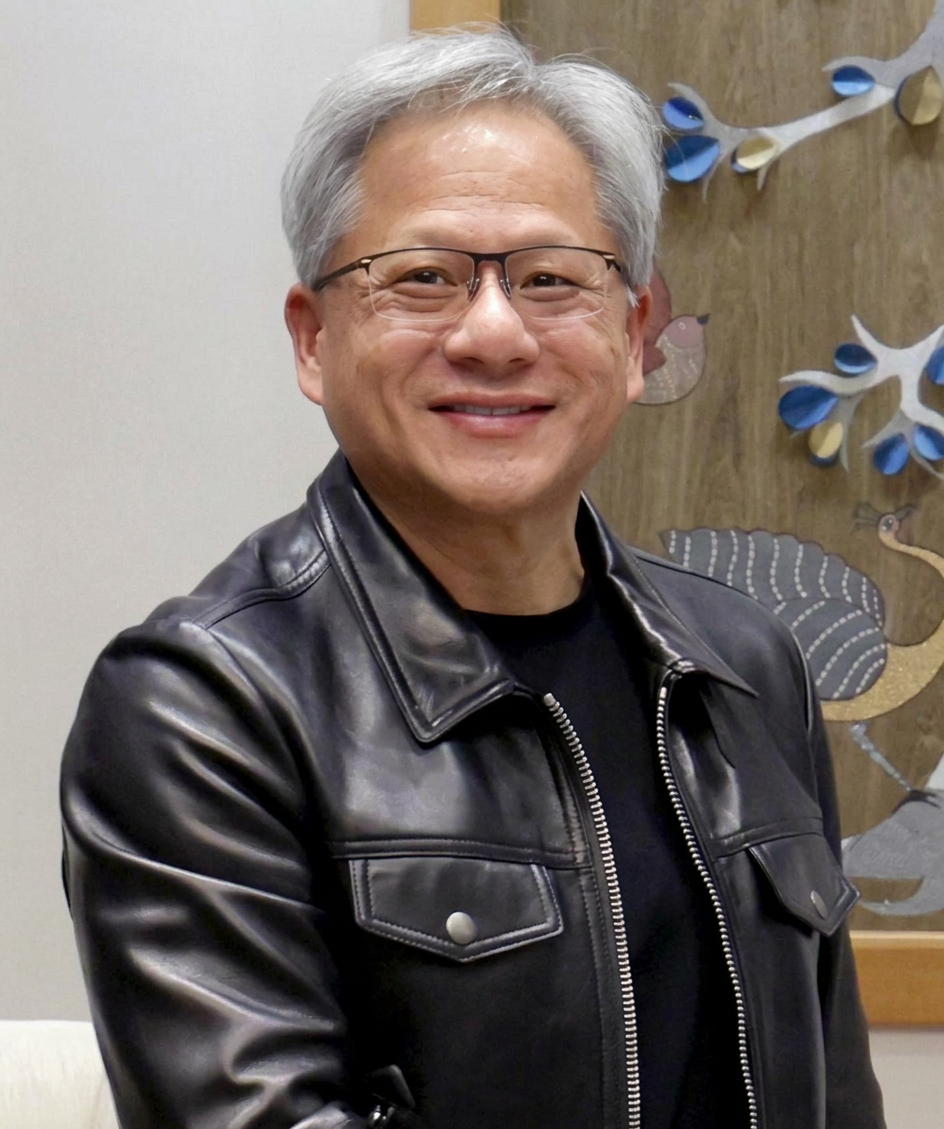
I like Jensen Huang. I’ve followed him for a long time.
I didn’t grow up with means, and the idea that someone could start out scrubbing toilets and working dead-end jobs and eventually carve out an extraordinary entrepreneurial path was inspiring to me.
How did Jensen get on my radar?
A poor choice in romantic partners, followed by an even poorer decision to take their investment advice. I bought NIO and lost nearly everything I’d invested.
I’d never purchased an individual stock before, and with a background in accounting, I’d always been prudent and methodical about managing my money. I felt foolish, but I couldn’t change what I’d already done.
I poured myself into research, reading financial news, reviewing public filings of senators’ stock trades, ordering an updated copy of The Intelligent Investor, and enrolling in a retirement workshop at Lewis & Clark College.
Ten months later, I landed on Nvidia.
I liked how Jensen built the company and structured his relatively flat organization in contrast to traditional corporate pyramids. He built and set a different table, and I was delighted by it. I was equally impressed with his hiring decisions.
I met with eight financial advisors, all of whom thought my decision was terrible and encouraged me to take a different approach. This included the individual who ran the retirement workshop and, last but not least, the romantic partner whose investment advice had gotten me into trouble in the first place.
Despite all of this, I stuck with my decision to invest in Jensen’s company.
I eventually sold the stock. It was a difficult decision, accompanied by more emotion than I’d anticipated. As the saying goes, “Bulls make money, bears make money, and pigs get slaughtered.” I didn’t want to be a pig, but ending my investment felt a little like wrapping up a long project with Nvidia. I’d become invested in more ways than one. So I was delighted when the opportunity arose to work on a project at his alma mater, Oregon State University. Go Beavs!
To be fair, I’ve learned I’m a platypus, having also enjoyed a long and wonderful run with the Executive MBA team at the University of Oregon.
Even after selling my shares, I continued following Nvidia, which, of course, meant following Jensen.
I became increasingly concerned as he cozied up to the current administration. If you play with monsters long enough, do you become one, or were you one all along?
After watching his recent interview with Ezra Klein, I was even more concerned. He didn’t sound like the Jensen I’d followed for so many years. I wondered whether he’d lost his way.
But as the controversy surrounding Jensen unfolded, something else began to trouble me.
When I look at the billionaires in Jensen’s orbit, I see others who more closely resemble America’s traditional image of power—men who have survived extraordinary controversies, demonstrated questionable judgment, and continued to enjoy enormous influence.
Consider Donald Trump and Elon Musk. Both have faced significant criticism over their conduct and leadership, yet each has retained extraordinary power and influence.
Musk didn’t invent the electric car, nor did he originally found Tesla. The development of electric vehicles has a long history, including GM’s groundbreaking EV1 program. If you haven’t seen the 2006 documentary Who Killed the Electric Car?, I highly recommend it. Musk was an early investor who helped build the company into an industry leader. His contribution was significant, but there’s a distinction between providing financial resources and building an organizational culture that cultivates generations of innovators.
Trump, meanwhile, has navigated controversies involving his businesses, personal conduct, and public leadership while repeatedly returning to positions of extraordinary influence.
I’m not suggesting these men are interchangeable or that their circumstances are identical. But I wonder whether our collective tolerance for misconduct changes depending on who holds the power, how familiar their behavior has become, and what we’ve been conditioned to expect from them.
Why do some powerful men seem to enjoy an almost limitless capacity for redemption while others face swift consequences?
The model minority myth has long placed Asian Americans under a particular set of expectations: to be hardworking, accomplished, disciplined, and deferential. But Jensen’s story is also one of socioeconomic disadvantage. He didn’t inherit a business empire or arrive with extraordinary financial resources. He worked his way through difficult circumstances, attended a public university, and spent decades building something remarkable.
When I contrast his journey with those who began life with far greater financial and social advantages, I wonder whether we’re overlooking something important about the relationship between privilege, power, and accountability.
Are we holding Jensen to a different standard because of his race, his humble beginnings, or the expectations we’ve attached to both?
And does our perception of who deserves forgiveness change depending on their background?
Subject to new information coming to light, I’m not convinced his departure from Nvidia was necessarily the best outcome. I am not condoning his behavior, nor dismissing the seriousness of the allegations, particularly those involving potential national security risks and workplace conflicts of interest. Those questions deserve thorough, independent investigation.
But his recent decisions don’t erase the fact that he once felt overlooked and underestimated and spent decades building a company that transformed an industry.
I often ask the leadership teams I coach to read a short article from The Atlantic, Power Causes Brain Damage, which explores how power can diminish the very capacities, particularly empathy and perspective-taking, that helped leaders succeed in the first place.
Psychologist Dacher Keltner explores this phenomenon in The Power Paradox, examining how power can undermine the qualities that initially enabled someone to attain it.
I think we need to do better than simply offering judgment.
We should expect accountability. We should demand ethical leadership. But we should also question whether we’re applying those expectations consistently.
Jensen could still be a force for good, opening doors for people like him who once felt discounted and left behind but found opportunity through America’s public university system.
And like me, ate at Denny’s in college.
I wonder whether we can make room for people to acknowledge their failures, accept the consequences, and find their way back.
After all, Apple endured a long and difficult period before Steve Jobs returned to lead its extraordinary resurgence.
I don’t know what the future holds for Jensen or Nvidia. Perhaps history will reveal that his departure was necessary. Perhaps we’ll look back and wonder whether another path was possible. And perhaps Nvidia’s greatest vulnerability will turn out to be the absence of the very person who made it extraordinary.
History is a wonderful teacher.
But I hope we’re willing to ask a difficult question in the meantime:
Are we holding all powerful leaders to the same standards, or are our expectations shaped by who we’ve been conditioned to see as deserving of power, forgiveness, and a second chance?

Michele Leedom
MicheleLeedom@ClintonStreet.Consulting
Michele is an executive coach, trainer, and facilitator located in West Coast. She supports leaders in understanding the importance of high quality communication and conflict resolution skills in acheiving high quality lives.
Photo of Jensen above provided by: NVIDIA Taiwan / Wikimedia Commons, CC BY 2.0.

